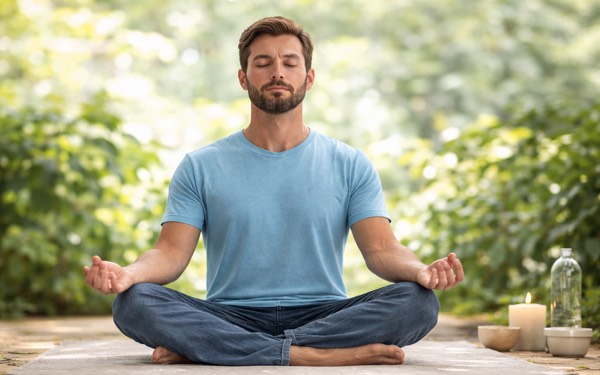
Burnout Mindfulness: How to Use Mindful Practices to Recover From Burnout
Burnout doesn’t arrive all at once. It builds slowly — the creeping exhaustion, the emotional detachment, the sense that nothing you do at work actually matters. By the time most people recognise they’re burned out, they’ve been running on fumes for months. Medication and vacation help, but they treat symptoms. Mindfulness targets the root: a nervous system stuck in chronic stress mode. Here’s how to use mindfulness practices to break the burnout cycle and rebuild your capacity for focused, meaningful work.
Why Burnout and Mindfulness Are Deeply Connected
Burnout is classified by the World Health Organization as an occupational phenomenon characterised by three dimensions: emotional exhaustion, depersonalisation, and reduced personal accomplishment. What makes burnout distinct from ordinary stress is that your recovery mechanisms have failed. You can’t simply rest your way out because your body has forgotten how to downshift.
This is where mindfulness becomes relevant. Research published in the Journal of Occupational Health Psychology found that mindfulness-based interventions significantly reduced all three dimensions of burnout among healthcare workers, teachers, and corporate employees. The mechanism is straightforward: mindfulness trains your prefrontal cortex to override the amygdala’s constant threat signalling. When you practice noticing thoughts without reacting to them, you’re literally rebuilding the neural pathways that burnout eroded.
Unlike productivity hacks or time management strategies, mindfulness doesn’t ask you to do more with less. It asks you to be present with what is — including the exhaustion — without the additional layer of judgement and resistance that makes burnout feel unbearable.
5-Minute Body Scan for Immediate Relief
The body scan is the single most effective mindfulness exercise for burnout because it directly addresses the physical tension that chronically stressed people stop noticing. When you’re burned out, you lose awareness of your body’s distress signals. Tight shoulders, clenched jaw, shallow breathing — these become your default state.
Here’s how to do a quick body scan anywhere, even at your desk. Close your eyes or soften your gaze. Start at the top of your head and slowly move your attention downward. Notice your forehead — is it tight? Your jaw — are your teeth clenched? Your shoulders — are they creeping toward your ears? Your chest — how deep is your breath? Move through your arms, hands, stomach, legs, and feet.
You’re not trying to fix anything. The goal is simply to notice. Research from the University of Massachusetts Medical School found that body scan meditation reduced cortisol levels by 23% after just eight weeks of regular practice. Even a single 5-minute session can interrupt the stress loop enough to create a small window of calm. Do this once in the morning and once before you leave work. The cumulative effect is significant.
Mindful Transitions: The Burnout Buffer
One of the hallmarks of burnout is that work bleeds into everything. You check email during dinner. You replay difficult conversations at 2 AM. The boundary between work-self and home-self dissolves completely. Mindful transitions are deliberate micro-practices that create a psychological boundary between roles.
The simplest version: when you finish work, pause for 60 seconds before doing anything else. Take three slow breaths. Mentally acknowledge that the work day is over. Name one thing you accomplished. Then consciously shift your attention to what comes next — cooking dinner, picking up your kids, going for a walk. This tiny ritual signals to your nervous system that the threat environment has changed.
A 2021 study in the Journal of Applied Psychology found that employees who practiced mindful transitions between work and home reported 31% lower emotional exhaustion and significantly better sleep quality. You can extend this practice to any transition: before meetings, between tasks, or when switching from focused work to administrative tasks. Each pause is a micro-recovery that prevents the accumulation of stress that leads to burnout. Consider using this guided meditation program to set up structured transition reminders throughout your day.
Compassion Meditation for the Inner Critic
Burnout amplifies your inner critic to an unbearable volume. You’re not just tired — you’re a failure for being tired. You’re not just struggling — everyone else is handling it fine, so what’s wrong with you? This self-critical narrative is both a symptom and an accelerant of burnout.
Compassion meditation, sometimes called loving-kindness or metta practice, directly counters this pattern. Sit comfortably, close your eyes, and silently repeat these phrases toward yourself: “May I be safe. May I be healthy. May I be at ease. May I accept myself as I am.” It will feel awkward and possibly ridiculous at first. That’s normal. The practice works not because the words are magic, but because you’re training your brain to generate self-directed warmth instead of criticism.
Research from the Center for Mindfulness at UMass showed that self-compassion meditation reduced burnout symptoms more effectively than traditional mindfulness alone. The reason is intuitive: burnout involves a collapsed sense of self-worth, and generic attention training doesn’t address that directly. Compassion meditation does. Start with three minutes daily. After two weeks, most practitioners report a noticeable reduction in the harshness of their inner dialogue.
Mindful Work Practices That Prevent Relapse
Recovery from burnout means nothing if you return to the same patterns that caused it. Mindfulness isn’t just a recovery tool — it’s an early warning system. Once you’ve rebuilt some baseline awareness, you can use mindful check-ins throughout your workday to catch stress accumulation before it becomes dangerous.
Set three check-in points: mid-morning, after lunch, and late afternoon. At each point, take 30 seconds to ask yourself three questions. What’s my energy level right now, on a scale of 1 to 10? What emotion am I feeling? What does my body need? Write the answers down. Over time, you’ll start seeing patterns — the meetings that drain you, the tasks that energise you, the time of day when you’re most vulnerable to overwhelm.
This data becomes the foundation for sustainable boundaries. If your energy consistently crashes after a particular recurring meeting, that’s actionable information. If your body consistently needs movement by 2 PM, build a walk into your schedule. Mindfulness transforms vague feelings of “I can’t keep doing this” into specific, addressable problems. Tools like this guided audio program can help you track these patterns and build a personalised prevention routine.
Building a Sustainable Mindfulness Practice
The most common mistake burned-out people make with mindfulness is treating it like another item on the to-do list. If your practice feels like an obligation, you’ve already undermined its purpose. Start absurdly small. One minute of conscious breathing before your morning coffee. A single body scan before sleep. That’s enough.
Consistency matters infinitely more than duration. A daily one-minute practice will produce better results than a weekly 30-minute session, because you’re training a habit, not logging hours. Research on habit formation shows that practices anchored to existing routines — “after I pour my coffee, I take three breaths” — have significantly higher adherence rates than standalone practices.
If you want guided support, apps and structured programmes can help, but they’re not required. The core practice is always available to you: notice what you’re experiencing, right now, without trying to change it. That simple act — repeated thousands of times — rewires the stress response that burnout exploited. Recovery is not about working harder at wellness. It’s about learning to be present with yourself again, one breath at a time. this subliminal affirmation tool