Mindfulness of Breathing: The Complete Guide to Breath-Focused Meditation
Of all the mindfulness practices available to you, breath-focused meditation is the oldest, the most studied, and arguably the most effective starting point. The Buddha taught mindfulness of breathing, known as Anapanasati, as a foundational practice over 2,500 years ago. Modern neuroscience has since confirmed what contemplatives understood intuitively: paying deliberate attention to your breath changes your brain, calms your nervous system, and sharpens your ability to focus.
The appeal is its radical simplicity. You do not need equipment, an app, a teacher, or a quiet room. You need your breath, which you already have, and your attention, which you can train. This guide walks you through everything from the most basic breath awareness to specific techniques you can use for different purposes.
Basic Breath Awareness: Where Everyone Should Start
Before learning any specific technique, the foundation of mindfulness of breathing is simply noticing that you are breathing. This sounds almost insultingly simple, and that simplicity is precisely why it works.
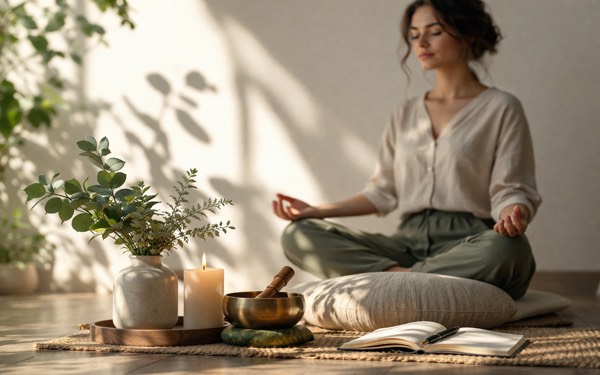
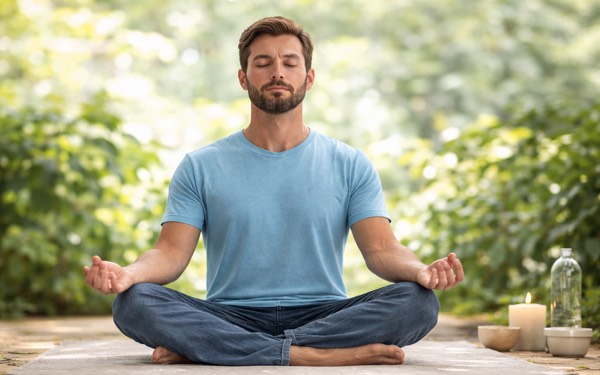
Sit in a comfortable position. You do not need to sit cross-legged on the floor unless that is genuinely comfortable for you. A chair works perfectly. Your back should be upright but not rigid, as if a string is gently pulling the crown of your head toward the ceiling. Rest your hands on your thighs or in your lap. Close your eyes or soften your gaze toward the floor.
Now, just breathe. Do not try to control your breath in any way. Let it be whatever it is, shallow or deep, fast or slow, smooth or ragged. Your only job is to notice it.
Pick an anchor point where the breath feels most vivid to you. Common choices include the nostrils, where you can feel the air entering and leaving, the chest, where you can feel the rise and fall, or the belly, where you can feel the expansion and contraction. There is no correct answer. Choose wherever the sensation is clearest for you.
Keep your attention on that anchor point. When your mind wanders, and it will wander constantly, notice that it has wandered, and gently return your attention to the breath. That is the entire practice. The wandering is not failure. The noticing that you wandered is the practice. Every time you catch your mind drifting and bring it back, you are doing a bicep curl for your attention.
Start with five minutes. Set a timer so you are not checking the clock. Five minutes will feel surprisingly long at first. That is normal and exactly what you should expect.
Diaphragmatic Breathing: Engaging Your Body’s Calming System
Most adults breathe shallowly into their upper chest. This pattern is associated with stress and anxiety because it activates the sympathetic nervous system. Diaphragmatic breathing, sometimes called belly breathing, reverses this pattern by engaging the diaphragm, the dome-shaped muscle beneath your lungs that is designed to be the primary driver of respiration.
To practice diaphragmatic breathing, place one hand on your chest and one on your belly, just below your ribcage. Breathe in slowly through your nose, directing the breath downward so that your belly hand rises while your chest hand stays relatively still. Your belly should push out as the diaphragm contracts and pulls air deep into your lungs. Exhale slowly through your mouth, feeling your belly fall back inward.
This is not how most people naturally breathe, so it may feel awkward at first. That awkwardness fades within a few sessions. What you are doing is retraining a muscular pattern that may have been dysfunctional for years.
The physiological effects are significant. Diaphragmatic breathing stimulates the vagus nerve, the longest cranial nerve in your body, which runs from your brainstem through your neck and into your abdomen. Vagal stimulation activates the parasympathetic nervous system, lowering heart rate, reducing blood pressure, and decreasing cortisol production. A 2017 study in Frontiers in Psychology found that participants who practiced diaphragmatic breathing for eight weeks showed significantly lower cortisol levels and reported reduced negative affect compared to a control group.
Practice diaphragmatic breathing for five to ten minutes daily. It pairs well with basic breath awareness, as you can use the belly as your anchor point and practice both mindfulness and deep breathing simultaneously.
Box Breathing: The Navy SEAL Technique for Calm Under Pressure
Box breathing, also known as square breathing or four-square breathing, is used by military personnel, first responders, and athletes to maintain composure in high-stress situations. It works by imposing a structured rhythm on your breath that overrides the erratic breathing patterns associated with stress.
The pattern is simple and symmetrical:
- Inhale through your nose for four counts
- Hold your breath for four counts
- Exhale through your mouth for four counts
- Hold your breath for four counts
- Repeat
Visualize tracing the sides of a square as you breathe. Up the left side on the inhale, across the top on the first hold, down the right side on the exhale, across the bottom on the second hold. This visualization gives your mind something concrete to focus on, which helps prevent the mental chatter that often undermines breathing exercises.
The holds are what distinguish box breathing from simple slow breathing. The breath retention after inhalation increases the oxygen exchange in your lungs, while the hold after exhalation activates the parasympathetic nervous system even more strongly than continuous slow breathing. The overall effect is a rapid reduction in physiological arousal.
Box breathing is particularly useful as a pre-performance technique. Before a presentation, a difficult conversation, an exam, or any situation where you need to be calm and sharp, four to six rounds of box breathing can measurably lower your stress response. Many people who are building a personal development practice find that structured breathing techniques like this one become one of their most-used tools. this guided meditation program
The 4-7-8 Technique: Breathing for Sleep and Deep Relaxation
Developed by Dr. Andrew Weil, the 4-7-8 breathing technique is designed specifically for relaxation and is often recommended as a natural sleep aid. The extended exhale and prolonged breath hold make it one of the most potent parasympathetic activators among structured breathing techniques.
The pattern is:
- Inhale quietly through your nose for four counts
- Hold your breath for seven counts
- Exhale completely through your mouth, making a whooshing sound, for eight counts
- Repeat for four cycles
The ratio matters more than the speed. If counting to seven or eight feels too long, you can speed up the count. What matters is that the exhale is twice as long as the inhale and that the hold is substantial. This ratio maximizes vagal tone and produces a deeply calming effect.
Dr. Weil describes this technique as a “natural tranquilizer for the nervous system.” Unlike sedative medications, it becomes more effective with practice rather than less. He recommends doing it twice daily, regardless of whether you feel stressed, to train your nervous system to respond to the pattern. Over four to six weeks of consistent practice, the relaxation response becomes faster and deeper.
A word of caution: the 4-7-8 technique can cause lightheadedness in beginners, especially during the long hold. If this happens, shorten the counts and build up gradually. Never practice it while driving or in any situation where dizziness could be dangerous. And if you experience anxiety during the breath holds, switch to a simpler technique like diaphragmatic breathing until you build more comfort.
When and How Often to Practice Mindful Breathing
The best time to practice is whenever you will actually do it. That said, certain times offer specific advantages.
Morning practice sets the tone for your day. Five to ten minutes of breath-focused meditation before you check your phone creates a buffer of calm that can persist for hours. It also establishes a baseline of body awareness that helps you notice stress building throughout the day.
Midday practice serves as a reset. After a stressful morning, even three minutes of box breathing or diaphragmatic breathing can bring your cortisol levels back down and restore cognitive function. The afternoon performance dip that most people experience around 2 PM can often be mitigated with a brief breathing session.
Evening practice helps transition from activity to rest. The 4-7-8 technique is particularly useful here. Practicing it in bed as you prepare for sleep can significantly improve sleep onset latency, the time it takes you to fall asleep.
For building a sustainable habit, consistency matters more than duration. Ten minutes daily will produce better results than forty minutes once a week. If you are just starting out, five minutes once daily is enough. After two weeks, you can increase to ten minutes, or add a second shorter session. A well-designed personal growth program can help you structure and progress your practice over time. this metabolism-boosting supplement
Common Mistakes Beginners Make with Breath Meditation
Having taught and practiced these techniques for years, I see the same mistakes come up repeatedly. Avoiding them will save you frustration and help you progress faster.
Trying to stop your thoughts. This is the single most common misunderstanding about meditation. The goal is not an empty mind. The goal is to notice when your mind has wandered and to return your attention to the breath. Thoughts will arise. That is what minds do. You are training the noticing, not the stopping.
Controlling the breath during awareness practice. When you are doing basic breath awareness, the instruction is to observe your natural breath, not to manipulate it. Many beginners unconsciously start controlling their breathing the moment they pay attention to it. If you notice this happening, take a few exaggerated breaths and then let go, allowing the breath to find its own rhythm.
Expecting immediate results. Some people feel calmer after their first session. Others feel restless, bored, or even more anxious. Both responses are normal. The benefits of breath-focused mindfulness are cumulative. They build over days and weeks of consistent practice, not in a single sitting.
Sitting in pain. There is a difference between mild discomfort and actual pain. If your legs fall asleep, your back aches, or your knees hurt, change your position. Suffering through physical pain does not make your meditation deeper. It makes you dread your next session. Use a chair, a cushion, a bolster, whatever you need to sit comfortably.
Judging your practice. There is no such thing as a “good” or “bad” meditation session. The session where your mind wandered fifty times and you brought it back fifty times was just as valuable as the session where you felt blissfully focused. Perhaps more valuable, because you practiced the skill of returning fifty times instead of zero. Drop the evaluation. Just show up and breathe. this guided meditation program
Mindfulness of breathing is the most democratic practice in the world. It requires nothing you do not already possess, it can be practiced anywhere, and its benefits are backed by thousands of years of tradition and decades of rigorous science. The only thing it asks of you is a few minutes of attention. Start today. Your breath is already waiting.